


With over 25 years of experience supplying pool tables to homes, pubs, and professional tournaments – including the UK, European and World Finals – we’ve helped thousands of customers find the right table. This guide shares everything we’ve learned, with insights from 6x World Pool Champion Mick Hill.
Buying a pool table is a significant investment, and with so many options available, it’s easy to feel overwhelmed. Whether you’re setting up a home games room, kitting out a pub/ club, or looking for a table that doubles as dining furniture, this guide will walk you through everything you need to know to make the right choice.

This is the first decision most buyers need to make, and it comes down to the style of pool you want to play.
English pool (also called British pool or blackball) is the game you’ll find in most UK pubs and clubs. It’s the style most of us grew up playing in those working men’s clubs many years ago.
Key characteristics:
• Smaller table sizes (typically 6ft or 7ft)
• Smaller balls (2 inch diameter with 1 7/8 inch cue ball)
• Tighter pockets with curved cushion openings similar to snooker
• Napped wool cloth (directional fabric that affects ball roll) once again, similar to snooker
• Traditionally slower, more defensive gameplay
English pool rewards precision and tactical play. The tighter pockets mean you need to be more accurate with your shots, and the napped cloth adds another layer of skill as you’ll need to account for how the cloth grain affects the ball’s path.
American pool (8-ball or 9-ball on the larger format) is what you see when you leave the UK, in our leisure centres like bowling alleys, in films and professional tournaments on TV. It’s a faster, more attacking game.
Key characteristics:
• Larger table sizes (7ft, 8ft, or 9ft with two tournament sizes in 7ft which is referred to as bar box, or 9ft full size)
• Larger balls (2¼” diameter)
• Wider pockets with pointed cushion openings
• Faster, non-directional high nylon speed cloth
• More offensive, break-building gameplay that encourages potting and staying on the table to clear up at any point
American tables suit players who enjoy a faster-paced game with longer potting opportunities. The wider pockets are more forgiving, but the larger playing surface means you need better positional play.

Choose English if:
• You play regularly in UK pubs or leagues on those tables
• You prefer slower tactical, strategic gameplay
• You have limited space (English tables are more compact)
• You want the authentic British pub pool experience
Choose American if:
• You watch and want to recreate professional pool you see on TV
• You prefer faster, more flowing gameplay
• You have a larger games room with space to accommodate these larger tables
• You enjoy American 8-ball or 9-ball formats
Many of our customers who’ve played pub pool their whole lives are surprised by how much they enjoy American tables once they try them. If you’re unsure, we’d always recommend visiting our showroom to play on both.

Choosing the right size isn’t just about the table – it’s about the room you’re putting it in. You need enough space around the table to cue comfortably without hitting walls or solid objects. Furniture like sofas, or bars are not normally an issues as you cue over them however, they still need to be taking into consideration.
• 6ft (playing area: approximately 70″ x 38″)
• 7ft (playing area: approximately 78″ x 42″)
• 7ft (playing area: approximately 78″ x 39″)
• 8ft (playing area: approximately 88″ x 44″)
• 9ft (playing area: approximately 100″ x 50″) – tournament standard
Here’s the formula: Table size + (2 x cue length) = Minimum room size
A standard cue is 57″ (about 4ft 9″). For comfortable play, add this measurement to each side of the table. We can reduce this slightly if space is tight to take into consideration the top rail depth.
Minimum room sizes (with standard 57″ cues):
6ft English
• Minimum Room Dimensions: 15ft 6″ x 12ft
7ft English
• Minimum Room Dimensions: 16ft 6″ x 13ft
7ft American
• Minimum Room Dimensions: 16ft 6″ x 13ft
8ft American
• Minimum Room Dimensions: 17ft 6″ x 14ft
9ft American
• Minimum Room Dimensions: 18ft 6″ x 15ft
Don’t worry – there are options:
Shorter cues: We supply 36″ and 48″ cues for tight spaces. Using these against walls means you can reduce the clearance needed.
Consider your layout: You might have more space on some sides than others. A slight compromise on one side (where you’ll use a shorter cue occasionally) can make a larger table viable which overall, is the better option.
Pool dining tables: These can be pushed closer to walls when not in use, then moved to the centre of the room for play.
As Mick Hill notes when advising customers: “Don’t automatically go smaller than you need. A slightly tight fit with a bigger table will give you better gameplay than a small table with loads of room around it. You’ll adapt to the occasional awkward shot.”

Absolutely. The playing surface is arguably the most important component of any pool table.
Slate is the gold standard for pool tables and the only material used in professional and tournament play.
Advantages:
• Once worked, it’s a perfectly flat playing surface
• Maintains level over time and doesn’t warp if properly supported
• Consistent ball roll
• Can be professionally levelled to precision
• Lasts a lifetime with proper care
Considerations:
• Heavier (important for floor loading and moving)
• Higher price point
• Requires professional installation
For English tables, slate is typically 20 – 25mm thick. American tables use 25 – 50mm slate, often in three pieces that are joined and levelled during installation.
MDF (Medium Density Fibreboard) is used in entry-level and recreational tables due to up front and reducing structural costs.
Advantages:
• Lower price point
• Lighter weight
• Easier to move/transport
Considerations:
• Can warp over time, especially if not properly cared for or left in humid conditions
• Playing surface degrades faster
• Ball roll becomes inconsistent as the bed ages
• Cannot be relevelled to the same degree like slate
For any table you’re planning to keep long-term, or if you play regularly, slate is worth the investment. MDF tables are fine for occasional recreational use, but most players upgrade within a few years once they experience the difference.
Every table we supply for commercial use – pubs, clubs, and tournaments – is slate bed. There’s a reason for that.

Not all pool tables are built to the same standard. Understanding the difference between home and commercial grade can save you money – or ensure you get the durability you need.
Built for the average household with moderate use.
Features:
• Lighter cabinet construction and more delicate finishes
• Standard cushion rubbers
• Basic cloth options
• Simpler leg mechanisms
• Designed for occasional to regular play
Best for: Home games rooms, family use, casual players
Built to withstand constant use in high-traffic environments by heavy handed individuals.
Features:
• Reinforced cabinet construction (in most cases made from resistant ply, not MDF) and hard wearing table finishes (marine ply, not MDF)
• Premium cushion systems (e.g., ProActive Cushion System)
• Heavy-duty cloth rated for thousands of games
• Coin mechanisms available if the table needs to go on Coin or Contactless
• Vandal-resistant components
• Replaceable panels for maintenance
Best for: Pubs, clubs, holiday parks, student unions, rental properties or homes where you want a product you will not need to replace
If you’re setting up a home games room that’ll see weekend use, a domestic table is perfectly adequate.
If the table will see daily use, multiple users, or needs to withstand rougher treatment, commercial grade is worth considering – even for home use. The build quality means it’ll play better and last longer and you won’t need to be so precious with it.
Many of our customers choose commercial-grade tables for their homes simply because they want the best playing experience. As we supply tables for the Annual BAPTO Pool Finals (for over 15 years running), we know what stands up to serious play.
If you love the idea of a pool table but can’t dedicate an entire room to one, a pool dining table might be the perfect solution.
A pool dining table looks and functions as an elegant dining table, but converts to a full pool table by removing the top leaves. You get two pieces of furniture in one footprint.
Quality of both functions: Some cheaper models compromise on either the dining or playing experience. Look for:
• Solid dining tops with substantial frame (not thin panels)
• A proper skeleton construction to handle the weight while keeping the cabinet shallow
• Proper slate bed underneath
• Quality cloth and cushions
Conversion ease: How easy is it to switch between modes? The best designs allow one person to convert the table in minutes. Avoid tables where the tops are too heavy to handle safely.
Storage for tops: Where will you store the dining leaves when the table is in play mode? Some designs include storage solutions; others require separate space.
Height: Pool tables are typically lower than dining tables. Pool dining tables usually sit at a comfortable dining height (around 76cm), which might feel slightly different if you’re used to playing on standard-height pool tables.
• Families who want a games room but need the dining space
• Open-plan living areas where a dedicated pool table would dominate a room and tie up too much space
• Anyone who wants the flexibility to switch between uses
• Buyers who need to justify the space to a partner!
The cloth on your pool table affects how the game plays more than most people realise.
Traditional English pool tables use napped cloth which is the same as Snooker. It’s a woollen material with a directional pile (like velvet). When you brush your hand across it, you’ll feel the difference depending on direction.
Playing characteristics:
• Balls roll differently with and against the nap
• Adds a skill element (reading the cloth)
• Authentic British pool feel
• Various thickness which relates to speeds available (fast, medium, slow)
• Various speeds available (fast, medium, slow)
Speed Cloth (American Pool Tables)
American tables typically use a high nylon cloth (Simonis and Hainsworth both being the most famous brands). This has no nap and provides a faster, more consistent playing surface for the larger tables used in American pool.
Playing characteristics:
• Consistent ball roll in all directions
• Faster gameplay
• Precise positional play
• Tournament standard
While green remains the traditional choice, modern tables offer extensive colour options. We supply cloth in dozens of colours to match your room décor – from classic green and blue to bold reds, purples, and even custom colours.
The cushions (or rails) determine how balls bounce off the sides of the table. Cheap cushions lead to inconsistent bounces and frustrating play.
Rubber quality: Premium cushion rubbers maintain a consistency in their bounce characteristics over years of play. Cheaper rubbers tend to be more inconsistent and can harden over time, leading to dead or unpredictable bounces.
Attachment method: How the cushions are attached to the rail affects consistency.
Standard tables: Cushions attached at three points
Premium tables: Cushions clamped along the entire length (like our ProActive Cushion System) or have what we call a solid block backing
Mick Hill specifically highlighted this when reviewing our SAM Atlantic table: “With the Atlantic, the bounce is even and reliable no matter where you hit the ball. On most tables, cushions are attached in three places. That can lead to uneven bounce.”
• Balls don’t come off the rail with consistent speed
• Dead spots where balls barely bounce back
• Visible cracks or hardening of the rubber which you can notice when pressing your thumb against it
• Balls jumping off the cushion rather than rolling smoothly
The good news: cushions can and over time are expected to be replaced. If you’re buying second-hand, factor in potential cushion replacement costs.
Professional installation is essential for any slate bed table. This isn’t a flat-pack furniture job.
What Professional Installation Includes
• Delivery to your room of choice (ground floor or otherwise)
• Assembly of the cabinet and frame
• Slate positioning and precise levelling
• Joining slate pieces (on three-piece tables)
• Cloth fitting on the bed and cushions
• Cushion attachment
• Professional check over before sign off
Even a slight slope on the playing surface affects ball roll. Professional installers use precision engineer levels to ensure the slate is perfectly flat. In most cases this process involves adjustable leg mechanisms and multiple levelling points within the table to compensate for uneven floors.
Good tables have easily accessible levelling systems. Our SAM tables, for example, use simple spanner adjustments rather than requiring you to lift the table or resort to beer mats.
If you ever need to relocate your table, It’s best you don’t attempt it yourself. Slate is heavy, fragile, and the table must be relevelled after any move. Budget for professional removal and reinstallation.
Pool tables range from a few hundred pounds to tens of thousands. Here’s what you can expect:
• MDF bed
• Basic cloth
• Lightweight construction
• Simple designs
• Suitable for occasional recreational play or a kids toy
Our advice: Fine for kids or very occasional play, but most players outgrow these quickly.
• Slate bed
• Multiple cloth options
• Solid construction
• Good cushion rubbers
• Good choice of styles and sizes
Our advice: This tends to be the sweet spot for most home buyers. You’ll get a table that plays well and will last a reasonable amount of time.
• One-piece slate or precision three-piece
• Premium cloth (Simonis or equivalent)
• In most cases a commercial-grade construction
• Advanced cushion systems
• Some customisation options
• Extended warranties
• Customisation options
Our advice: Tables for serious players or those who want the best. This is the level we supply to clubs and competitions.
• Bespoke designs
• Exotic materials and finishes
• Designer collaborations
• Convertible/dining options at the highest level
• Heirloom quality
Our advice: For those who want a stylish statement piece that’s also a world-class pool table.
A quality pool table should last decades with proper care. Here’s how to keep yours in top condition:
Brush the cloth: Use a proper pool table brush (not a household brush) and brush in one direction only – from the baulk end to the spot end on napped cloth.
Cover when not in use: Dust, sunlight, and spills are the enemies of cloth. A fitted cover protects your investment when not in use.
Never use a vacuum cleaner on the bed, brush any dirt into the pockets and use the nozzle of a vacuum cleaner to remove the debris from there.
Clean the balls: Dirty balls transfer grime to the cloth. Wipe them with a damp cloth or use a ball cleaner.
Check the level: Use a spirit level occasionally to ensure nothing has shifted.
Inspect cushions and bed cloth: Look for signs of wear or hardening on the cushions as well as any areas of bed cloth where it’s beginning to look thin and thread bear.
Check all bolts and fixtures: Tighten anything that’s loosened over time.
With normal home use, cloth should last 2-3 years if looked after. Commercial tables in busy venues normally need annual replacement with some opting for multiple re-cloths per year to stay looking fresh.
• Visible wear patterns or thin patches on the bed cloth
• Balls no longer roll true
• Stains that affect play
• Tears or accumulation of burns on American speed
A used pool table can be excellent value if you know what to look for and what to avoid.
Slate condition: Any cracks, chips, or damage to the slate is a deal-breaker. Slate cannot be repaired to a high standard and they are expensive to replace.
Cushion bounce: Bring some balls and test the bounce at various points. It should be consistent and lively. If it’s not, it means the cushions will need to be replaced and you should accommodate that cost.
Cabinet integrity: Check for water damage, warping, or structural weakness. Especially the base panel on tables that use a lot of MDF. Any damage to that panel will make it impossible to get a precise level on the table.
Cloth condition: Assume you’ll need to re-cover as some tables lose the cloth when disassembling. Factor this into your budget (£200-500 for basic re-cloth).
Manufacturer and model: Research the original spec. Some brands hold value and quality better than others.
• Disassembly and removal from seller’s location
• Transport (slate tables are heavy and need proper vehicles)
• Professional installation and levelling at your location
• Potential cloth replacement
• Potential cushion replacement
Sometimes these costs close the gap between used and new, especially once you factor in warranties and peace of mind.
Usually yes, but check your floor loading and access to the desired room. A slate bed pool table weighs 200-500kg depending on size. Solid concrete floors are never a problem. Suspended wooden floors may need assessment but in most cases don’t. Most modern homes handle the weight fine, but access can be quite limiting so it’s worth checking.
Stock tables typically deliver within 2-4 weeks. Custom orders (specific colours, finishes, or configurations) take considerably longer depending on the manufacturer.
Extreme cold or damp can affect cloth and cushions. A consistent, moderate temperature is ideal. You don’t need to heat the room specifically for the table, but if your room is an unheated outbuilding where condensation might form, this will limit the tables we would recommend.
Absolutely – it’s a great family game. Consider a 6ft table for younger children, as they can reach more shots. Teach them to care for the cloth (no sitting on the table, no drinks nearby) and you’ll instil good habits early.
Most tables include balls, a triangle, chalk, and a basic cue set. Premium tables often include better accessories. We always recommend budgeting for a quality cue if you’re a serious player – house cues are fine for guests but won’t improve your game.
We hope this guide has helped clarify what you need. If you’d like personal advice, want to try different tables in person, or have questions about your specific space, we’d love to help.
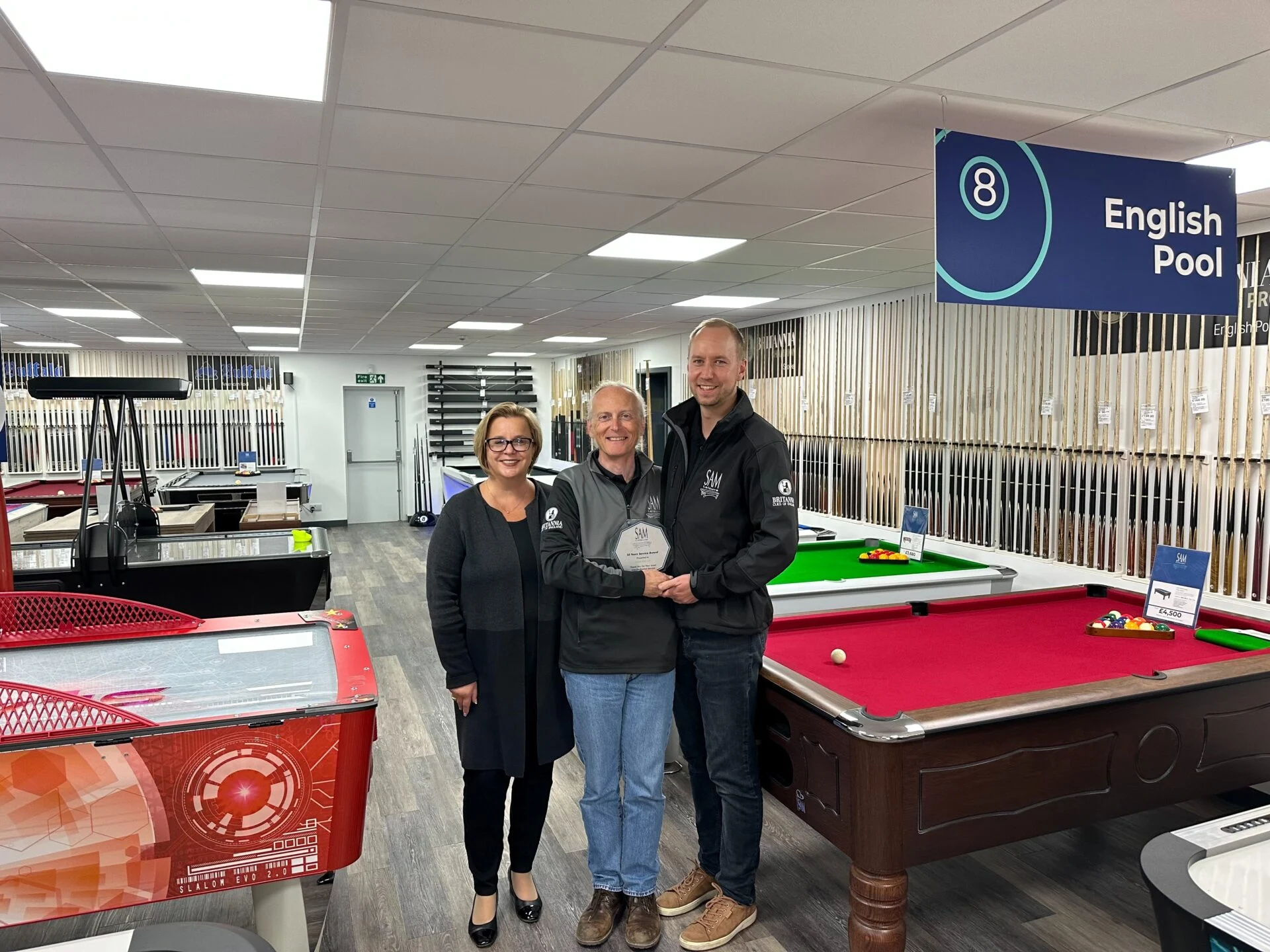
Visit our Coventry showroom to play on a range of tables, or contact us for a no-obligation chat about your requirements.
• Over 30 years of experience
• Official supplier of SAM, Buffalo, Predator and Toulet tables
• Supplying tables for UK, European and World Finals for over 15 years
• 10,000 sq ft warehouse with stock ready for delivery
• Our own professional installation teams
• Trusted by professional sportspeople, celebrities, and thousands of homes and venues across the UK
Have a question this guide didn’t answer? Get in touch – we’re always happy to help.