How to Set Up a Pool Table & Rack Balls Correctly (2026 Guide)
Setting up a pool table correctly is essential for fair, professional-level gameplay. Whether you’re playing 8-ball, 9-ball, or English pool, proper ball racking and table preparation ensure every game starts on equal footing.
This complete guide covers everything from racking balls for different game types to positioning the cue ball and maintaining your table for optimal performance. Follow these steps to set up your pool table like a pro.
Even ball movement: Level tables and clean cloth prevent unpredictable rolls
Longer table lifespan: Proper maintenance protects your investment for decades
Professional-level play: Tournament-standard setup improves your game
Better player experience: Smooth, consistent gameplay keeps everyone engaged
Poor setup leads to weak breaks, uneven ball scatter, and frustrated players. Take 5 minutes to set up correctly, and you’ll enjoy hours of perfect gameplay.
How to Prepare Your Pool Table Before Setup
Before racking the balls, prepare your pool table properly:
1. Check the Table Level
Why it matters: Even a 1-2mm tilt causes balls to roll unevenly, making accurate shots impossible.
How to check:
Place a spirit level on the table surface (lengthwise and widthwise)
Check that the bubble sits perfectly centred
If tilted, adjust leg levelers or add shims under the slate
Recheck until perfectly level
Pro tip: Check level monthly if the table is in a high-traffic area. Bumps and vibrations can shift tables over time.
2. Clean and Brush the Cloth
Pool table cloth comes in two types, each requiring different care:
For napped cloth (UK pool and snooker tables):
Brush from the baulk line towards the far end (with the nap direction)
Use a specialized pool table brush with soft bristles
Never brush against the nap — this damages fibres and creates rough spots
Remove all chalk dust and debris
Iron the cloth periodically to reset the nap (optional but recommended)
Wipe with a slightly damp cloth for stubborn chalk marks
Cloth wrinkles: Keep cloth tight at all times. Wrinkles can’t be smoothed out once they form — proper tension is essential during installation.
SAM Leisure tables use professional-grade Hainsworth Smart cloth that resists wrinkles, maintains consistent nap, and ensures smooth gameplay for years.
3. Inspect and Clean the Balls
Dirty pool balls pick up chalk, dust, and oil, affecting roll accuracy and cloth condition.
Quick clean (before every game):
Wipe each ball with a microfiber cloth
Check for chips or cracks
Remove visible chalk marks
Deep clean (weekly):
Use ball cleaner or warm soapy water
Scrub each ball individually
Rinse and dry completely
Buff to restore shine
How to Rack Pool Balls: Step-by-Step by Game Type
Ball racking varies by game type. Follow these guides for perfect setup every time.
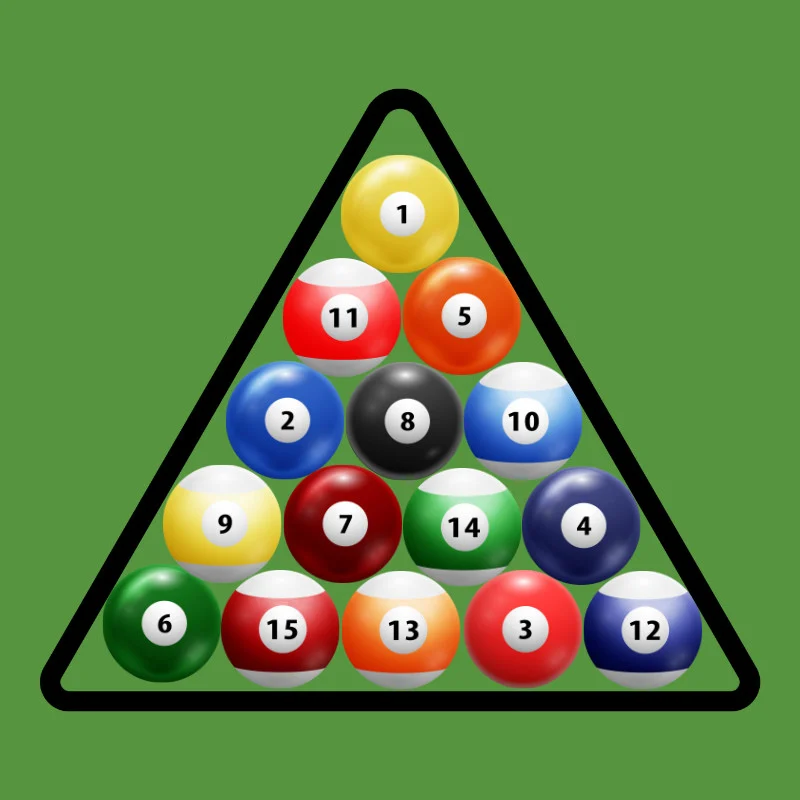
How to Set Up 8-Ball Pool (American/Spots & Stripes)
Position the rack: Place the triangle rack over the foot spot (the marked dot at the far end of the table)
Apex ball: Place any solid or stripe at the front tip of the triangle, directly on the foot spot
8-ball placement: Position the black 8-ball in the exact centre of the third row
Back corner balls: Put one solid in one rear corner and one stripe in the opposite rear corner
Remaining balls: Randomly arrange the rest, alternating solids and stripes where possible for visual balance
Tighten the rack: Push all balls firmly towards the apex, ensuring zero gaps between balls
Remove the rack: Lift the triangle straight up without disturbing the balls
Pro tips:
Some players always place the 1-ball at the apex for consistency (legal in most formats)
The tighter the rack, the better the break — professional players use magic racks or templates
Check that the 8-ball isn’t touching the apex ball (this can cause early 8-ball pockets)
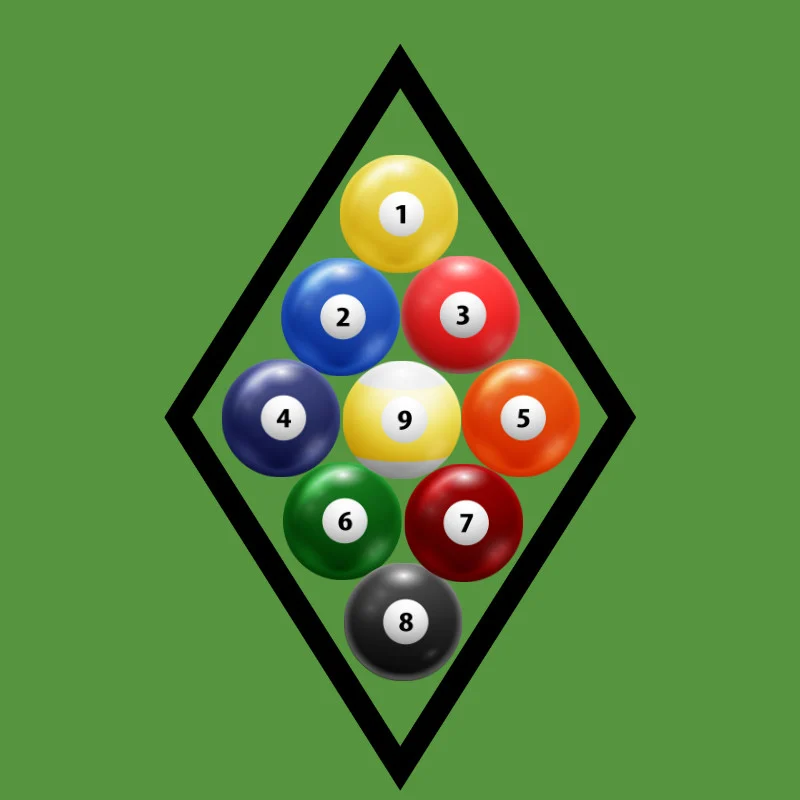
How to Set Up 9-Ball Pool
Equipment needed:
Diamond rack (or use front of triangle rack)
Balls numbered 1-9
Step-by-step instructions:
Position the rack: Place the diamond rack on the foot spot
1-ball placement:Always position the 1-ball at the apex (front tip) on the foot spot — this is mandatory in 9-ball
9-ball placement: Place the 9-ball in the exact centre of the diamond
Remaining balls (2-8): Arrange randomly in the remaining positions
Tighten the rack: Push balls tightly together, eliminating all gaps
Remove the rack: Lift smoothly without disturbing ball positions
Why tight racking matters in 9-ball:
A loose 9-ball rack causes weak breaks and unfair advantages. The 1-ball must drive forcefully into the pack for proper scatter. Professional 9-ball tournaments often use template racks (magic racks) that guarantee perfect tightness every time.
Alternative setup: Some casual players use only striped balls (2-10) with the 9-ball at the apex and 8-ball in the middle. This is non-standard but acceptable for friendly games.
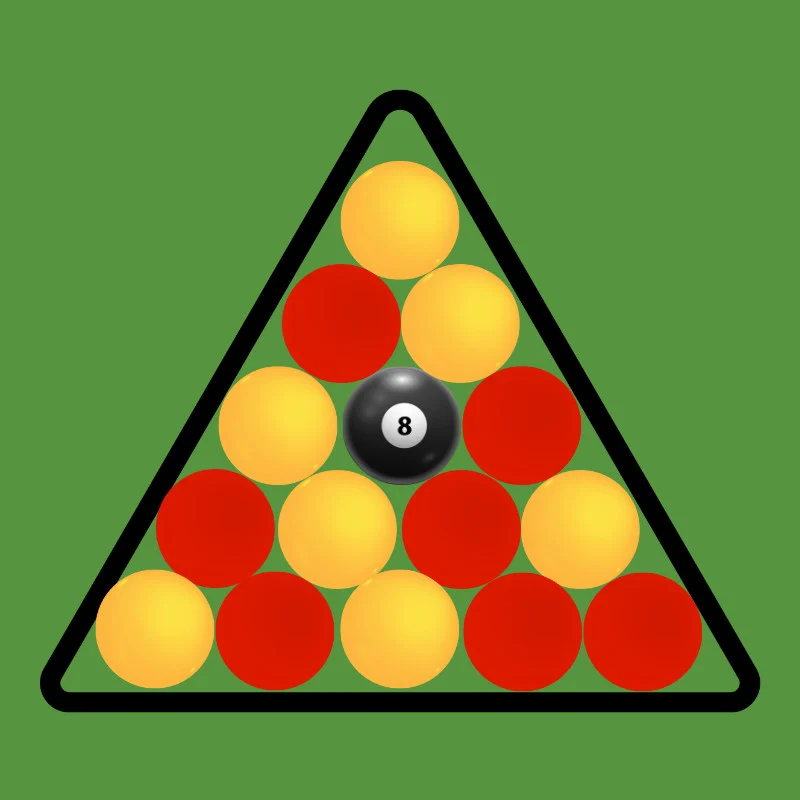
How to Set Up English 8-Ball Pool (Reds & Yellows – WPBA Rules)
Equipment needed:
Triangle rack
15 balls (7 reds, 7 yellows, 1 black)
2-inch balls (smaller than American pool)
Step-by-step instructions:
Check the cloth: Brush from baulk line forward, remove debris
Position the rack: Place triangle over the foot spot
Black ball: Position the black ball in the centre of the rack (middle of third row)
Back corner balls: Place one red in one corner, one yellow in the opposite corner
Front apex ball: Place a ball matching the colour of the left back corner
J-shape pattern: Form a “J” with three same-coloured balls and two opposite colour next to the black
Tighten and remove: Compress balls tightly, lift rack carefully
What is the “J-shape”?
The J-shape is a specific pattern required by WPBA rules. Looking at the rack from above, you’ll see three consecutive balls of one colour forming a curved “J” shape around the black ball, with two balls of the opposite colour filling the gaps.
Key difference from American 8-ball: English pool uses 2-inch balls (vs. 2.25-inch American), smaller tables (6ft/7ft vs. 8ft/9ft), and tighter pockets — requiring more precision and strategic play.
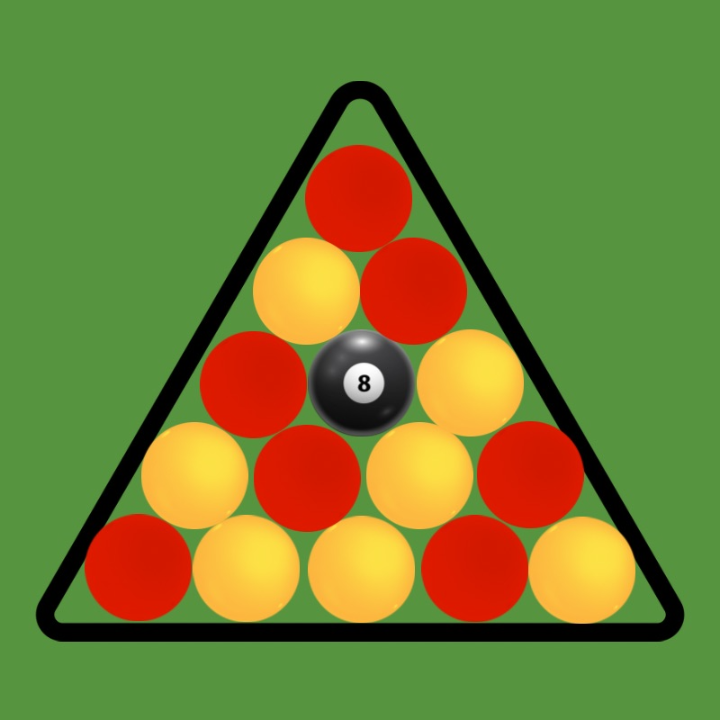
How to Set Up Blackball Pool (BAPTO Rules)
Equipment needed:
Triangle rack
15 balls (7 reds, 7 yellows, 1 black)
Step-by-step instructions:
Position the rack: Place triangle over the foot spot
Black ball (8-ball): Place in the centre of the rack
Alternating colours: Arrange red and yellow balls in a strict alternating pattern throughout the entire rack
No touching same colours: Ensure no two balls of the same colour are directly adjacent
Tighten the rack: Compress balls firmly together
Remove carefully: Lift rack without disturbing balls
Blackball vs. WPBA English 8-ball:
Blackball rules are simpler than WPBA — no J-shape pattern required, just strict alternation. Blackball is popular in pubs and clubs across the UK, while WPBA rules are used in competitive tournaments.
Cue Ball Placement for the Break
The cue ball (white ball) can be placed anywhere behind the baulk line (the line across the table near the end where you’re breaking from).
Strategic cue ball positioning:
Centre break (most common): Aligns with the apex ball for maximum power transfer and even ball spread across the table
Slightly off-centre: Helps control which side of the table balls scatter to — useful for positioning after the break
Side break (advanced): Used in 9-ball to pocket the wing ball or control the 1-ball’s path
Soft break (snooker/English pool): Gentle contact to maintain control rather than scatter balls widely
Breaking tip: The closer you align the cue ball to the table’s centre line, the more symmetrical your break will be. Off-centre breaks create spin and can help you control the cue ball’s final position.
Common Pool Table Setup Mistakes to Avoid
Even experienced players make these setup errors that affect gameplay:
1. Loose Racking (Most Common Error)
Problem: Gaps between balls cause weak breaks, uneven scattering, and unfair advantages. The lead ball pushes into the pack with less force, reducing ball spread.
Solution:
Push all balls firmly to the apex before lifting the rack
Use a magic rack or template rack for tournament-level tightness
Check for visible gaps between balls — there should be none
If using a wooden/plastic rack, tap it gently to settle balls before tightening
2. Incorrect Ball Placement
Problem: Placing the 8-ball, 9-ball, or apex ball in the wrong position violates official rules and can be challenged in competitive play.
Solution:
8-ball: Centre of rack (third row middle)
9-ball: 1-ball at apex, 9-ball in centre
English pool: Black in centre, specific corner colour rules
Double-check placement before removing the rack
3. Uneven or Dirty Cloth
Problem: Wrinkled, dusty, or stained cloth causes unpredictable ball movement. Chalk dust creates “slow spots” where balls decelerate unevenly.
Solution:
Brush the cloth before every game session
Iron napped cloth if wrinkles appear (UK/snooker tables)
Vacuum around cushions weekly to remove hidden chalk dust
Invest in quality cloth:SAM Leisure tables use professional Hainsworth Smart cloth that resists wrinkles, maintains consistent play, and lasts significantly longer than budget alternatives
4. Unlevel Table
Problem: Balls roll to one side, making accurate shots impossible. Even a 1mm tilt is noticeable during play.
Solution:
Check level monthly using a spirit level (lengthwise and widthwise)
Adjust leg levelers in small increments (quarter-turns)
Add shims under the slate if legs are fully extended
Test with a slow roll — ball should stop without drifting left/right
5. Wrong Rack Type
Problem: Using a triangle rack for 9-ball or diamond rack for 8-ball creates incorrect ball formations.
Solution:
Triangle racks: 8-ball, English pool, Blackball (15 balls)
Diamond racks: 9-ball (9 balls)
Keep both types available if you play multiple games
Consider magic racks for perfectly tight setup every time
6. Dirty or Damaged Balls
Problem: Dirty balls pick up more chalk, wear the cloth faster, and roll unpredictably. Chips or cracks cause wobbling.
Solution:
Wipe balls with microfiber cloth before each game
Deep clean weekly with ball cleaner or soapy water
Replace chipped or cracked balls immediately
Store balls in a case when not in use to prevent damage
Pool Table Maintenance: Daily, Weekly, Monthly & Yearly Schedule
Proper maintenance keeps your pool table playing like new for decades. Follow this schedule:
Daily Maintenance (After Each Playing Session)
Brush the cloth — Remove chalk dust and debris. For napped cloth, brush from baulk line forward (with the nap)
Wipe the balls — Quick clean with microfiber cloth to remove chalk and oils
Cover the table — Use a pool table cover to protect from sunlight, dust, and accidental spills
Check for spills — Blot immediately with clean cloth (never rub)
Weekly Maintenance
Deep clean pool balls — Use ball cleaner or warm soapy water, scrub, rinse, and dry completely
Vacuum around cushions — Remove hidden chalk dust and debris from hard-to-reach areas
Check pocket screws — Tighten if loose (loose pockets can damage cloth)
Inspect cues — Check tips for wear, clean shafts with damp cloth
Test cushion bounce — Roll a ball along each rail to check for dead spots
Monthly Maintenance
Check table level — Use spirit level, adjust leg levelers if needed
Inspect cushions thoroughly — Look for separation from rails, cracks, or dead spots
Replace worn spot markers — Faded or peeling spots affect accurate ball placement
Iron napped cloth — (UK/snooker tables only) Reset the nap direction for consistent play
Deep clean pockets — Remove dust and debris that accumulates inside leather pockets
Place the 8-ball in the centre of the triangle rack (middle of third row). Put one solid and one stripe in the back corners. Place any solid or stripe at the apex (front) on the foot spot. Arrange remaining balls randomly. Push all balls tightly to the apex, then remove the rack carefully.
What is the foot spot on a pool table?
The foot spot is the marked dot at the far end of the table where the apex ball sits when racking. It’s located at the intersection of the second diamond on the long rail and the table’s centre line. This ensures the rack is positioned correctly every time.
How tight should a pool rack be?
Balls should be compressed with zero gaps between them. Push all balls firmly to the apex before removing the rack. You shouldn’t be able to slide a piece of paper between any two balls. Professional players use magic racks or templates to guarantee perfect tightness.
Can you use a triangle rack for 9-ball?
Technically yes — use just the front portion of the triangle to form a diamond shape with 9 balls. However, a proper diamond rack is strongly recommended for consistent 9-ball setup and is required in tournament play.
How often should you brush a pool table?
Brush after every playing session (daily if used frequently). This removes chalk dust and maintains the cloth nap, ensuring consistent ball roll. For commercial tables in pubs or clubs, brush multiple times per day.
What’s the difference between American and English pool setup?
American 8-ball uses 2.25-inch balls with spots & stripes in a triangle rack on 8ft or 9ft tables. English pool uses smaller 2-inch balls with reds & yellows in specific alternating patterns on 6ft or 7ft tables with tighter pockets, requiring more precision.
How do you know if your pool table is level?
Place a spirit level on the table surface lengthwise and widthwise. The bubble should sit perfectly centred. Alternatively, place a ball on the centre spot — it should remain completely still without rolling in any direction.
What happens if you scratch on the break in 8-ball?
In most rulesets, scratching on the break is a foul. The opponent gets ball-in-hand behind the head string (baulk line). The balls remain where they stopped, and the opponent may place the cue ball anywhere behind the line for their first shot.
Should the 8-ball go in the middle for English pool?
Yes. In both WPBA English 8-ball and Blackball pool, the black ball (8-ball) must be placed in the exact centre of the triangle rack (middle position of the third row).
How long does pool table cloth last?
With proper care, quality cloth lasts 3-5 years for home tables and 1-2 years for commercial tables. Professional-grade cloth like Hainsworth Smart (used on SAM Leisure tables) can last 5-7 years in home use due to superior durability and stain resistance.
Can you clean pool table cloth with water?
Use water sparingly and only for spot-cleaning spills. Blot (never rub) immediately with a clean, slightly damp cloth. For regular maintenance, use a specialized pool table brush — water can damage the cloth backing and cause mildew if overused.
Shop Professional Pool Tables at SAM Leisure
Now that you know how to set up and maintain a pool table correctly, ensure you’re playing on quality equipment that will last decades.
Questions about setting up your SAM Leisure pool table?Contact our team for expert advice. We’ve been helping UK players set up perfect games rooms for over 20 years.
Visit our Coventry showroom to see our full range and try tables before you buy. We offer delivery and professional installation across the Midlands and UK-wide.
To provide the best experiences, we use technologies like cookies to store and/or access device information. Consenting to these technologies will allow us to process data such as browsing behaviour or unique IDs on this site. Not consenting or withdrawing consent, may adversely affect certain features and functions.
Functional
Always active
The technical storage or access is strictly necessary for the legitimate purpose of enabling the use of a specific service explicitly requested by the subscriber or user, or for the sole purpose of carrying out the transmission of a communication over an electronic communications network.
Preferences
The technical storage or access is necessary for the legitimate purpose of storing preferences that are not requested by the subscriber or user.
Statistics
The technical storage or access that is used exclusively for statistical purposes.The technical storage or access that is used exclusively for anonymous statistical purposes. Without a subpoena, voluntary compliance on the part of your Internet Service Provider, or additional records from a third party, information stored or retrieved for this purpose alone cannot usually be used to identify you.
Marketing
The technical storage or access is required to create user profiles to send advertising, or to track the user on a website or across several websites for similar marketing purposes.